Canton of Uri
William TellThe Canton of Uri is presented as a mountain-and-lake homeland and as a principal member of the three-canton political community. Its dramatic significance lies in the way those two dimensions meet: the landscape shapes movement and danger, while Uri’s standing in the alliance makes it a center of debate over leadership, inherited rights, and collective resistance.
Landscape and Dramatic Setting
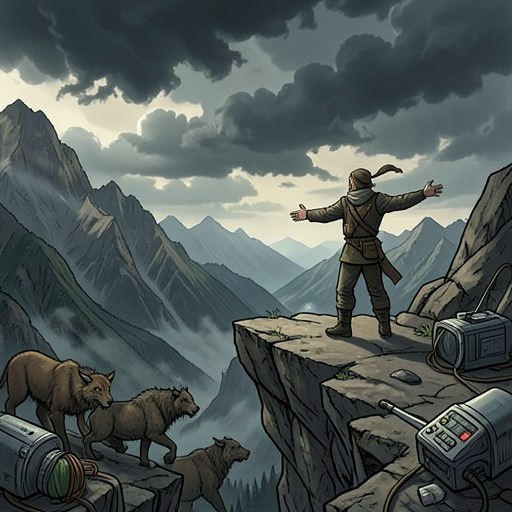
The play gives the Uri-associated landscape an active, changeable presence. Green meadows lie beneath vapor, then a rumbling, cracking sound rises among the mountains as cloud shadows sweep across the scene. In another passage, thunder and roaring wind announce that the south wind has risen and the lake is climbing. These shifts make the natural world more than a painted background: mountain and water conditions enter the action as immediate forces that can alter what people are able to do.
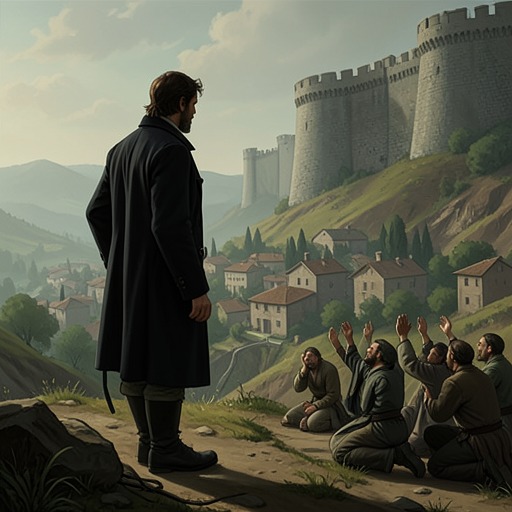
Altdorf provides a more settled civic setting. A common outside the town is overlooked by an eminence where a castle is under construction; its rear section is finished, and the outline of the whole building can already be made out. The contrast between open common ground and a rising fortification places communal life beside a visible assertion of power. Later, the assembled representatives discuss driving out tyrants and their agents and bringing their strongholds down, giving the unfinished castle a wider resonance within the play’s conflict over rule.
Place in the Three-Canton Alliance
Uri participates in political deliberations alongside the Canton of Schwyz and the Canton of Unterwalden. The question of which canton should lead the united council exposes a real contest over precedence: Schwyz may claim the distinction, while the representatives of Unterwalden decline to compete. The response grants Uri the sword, on the stated ground that its banner takes precedence in battle. Uri’s position is therefore expressed not only as membership but as a particular place in the alliance’s ordering and military symbolism.
That precedence does not erase the need for cooperation. The alliance is described as a compact among the people of Uri, the community of Schwyz, and the people of the mountains of Unterwalden. The shared document gives the three communities a collective political frame, while the debate over the sword shows that their unity still requires decisions about how authority and honor are distributed.
Rights and Political Authority
The political discussion distinguishes freely chosen imperial protection from submission to a prince. The representatives maintain that their communities sought the Empire’s protection of their own accord, and that this arrangement was recorded in Emperor Frederick’s charter. The same exchange recognizes that even the freest communities may retain a feudal superior and a supreme judge to whom disputes can be appealed. The play thus presents Uri’s inherited status through overlapping forms of authority rather than as simple independence from every higher power.
The account of jurisdiction further narrows the emperor’s stated right to adjudicating the penalty of death, with a powerful noble appointed as his delegate. Against this background, the proposed resistance is framed as a defense of ancient rights: Walter Furst urges the assembled men to shake off a hated thraldom and keep those rights inviolate. He also draws a boundary around the action—doing what necessity requires, but nothing beyond it—before calling for the tyrants and their agents to be expelled and their strongholds razed. Uri’s political identity is consequently tied to a claim of limited, historically grounded resistance, not to an unlimited rejection of lawful authority.
Landscape, Conflict, and Significance
The play’s lake and mountain imagery gives political struggle a material setting. Storm, wind, and rising water make the environment precarious; the mountains and exposed terrain frame the communities’ vulnerability as well as their capacity to act together. In Wilhelm Tell’s account of the voyage with the viceroy and his company, his bow and quiver lie astern beside the helm. He orders the crew to exert themselves until the boat reaches a shelving crag, which he identifies as the point where danger will be past. The episode links peril on the water with the practical significance of knowing the terrain, without making the landscape itself a substitute for political choice.
As a location, the Canton of Uri therefore carries both local and confederate weight. Altdorf’s common and unfinished castle place civic life within sight of growing authority; the mountains and lake make the surrounding world unstable and consequential; and the debates among the three cantons define Uri’s role within a larger alliance. Its setting and political status meet in the play’s central tension: communities accustomed to governing themselves must decide how to preserve their rights when delegated power becomes oppressive.